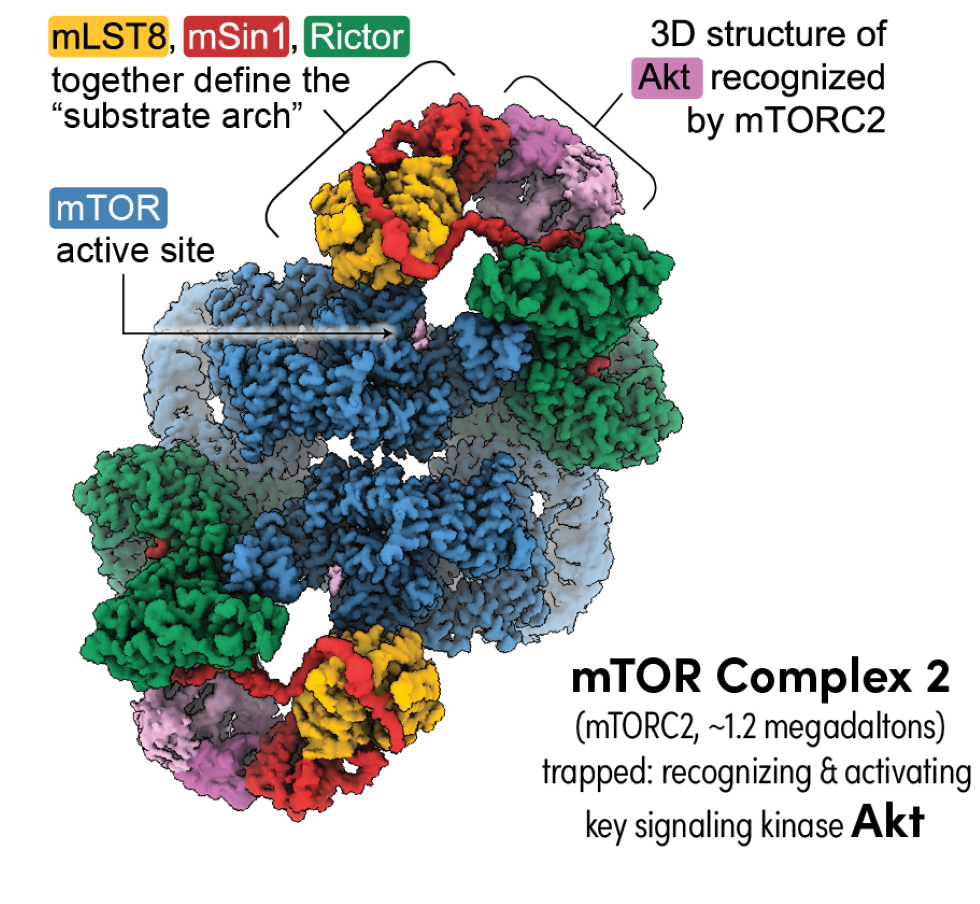
Brown Pathology physician scientist Martin Taylor, MD PhD, is the lead author on a study that has uncovered how the mTOR signaling complex mTORC2 specifically activates Akt — a critical step in the PI3K–mTOR–Akt pathway often hijacked by cancer cells. The paper, which was published in Science on Thursday, Nov. 27, rationally designed a protein-small molecule probe Akt-Torin and used it to freeze the action between mTORC2 and its most important target, Akt, and map its structure. This breakthrough reveals structural details that could allow development of drugs selectively targeting mTORC2’s cancer-relevant function while sparing the related nutrient-sensing complex mTORC1, which would avoid the drawbacks of broad mTOR inhibitors. The new probe design strategy is broadly applicable and may help researchers dissect and target many other signaling proteins inside cells. The team is now working to build drug-screening assays — the first step toward translating this discovery into next-generation cancer therapies.